
Patient Transport Ambulance: 5 Units for Mongolia Hospital

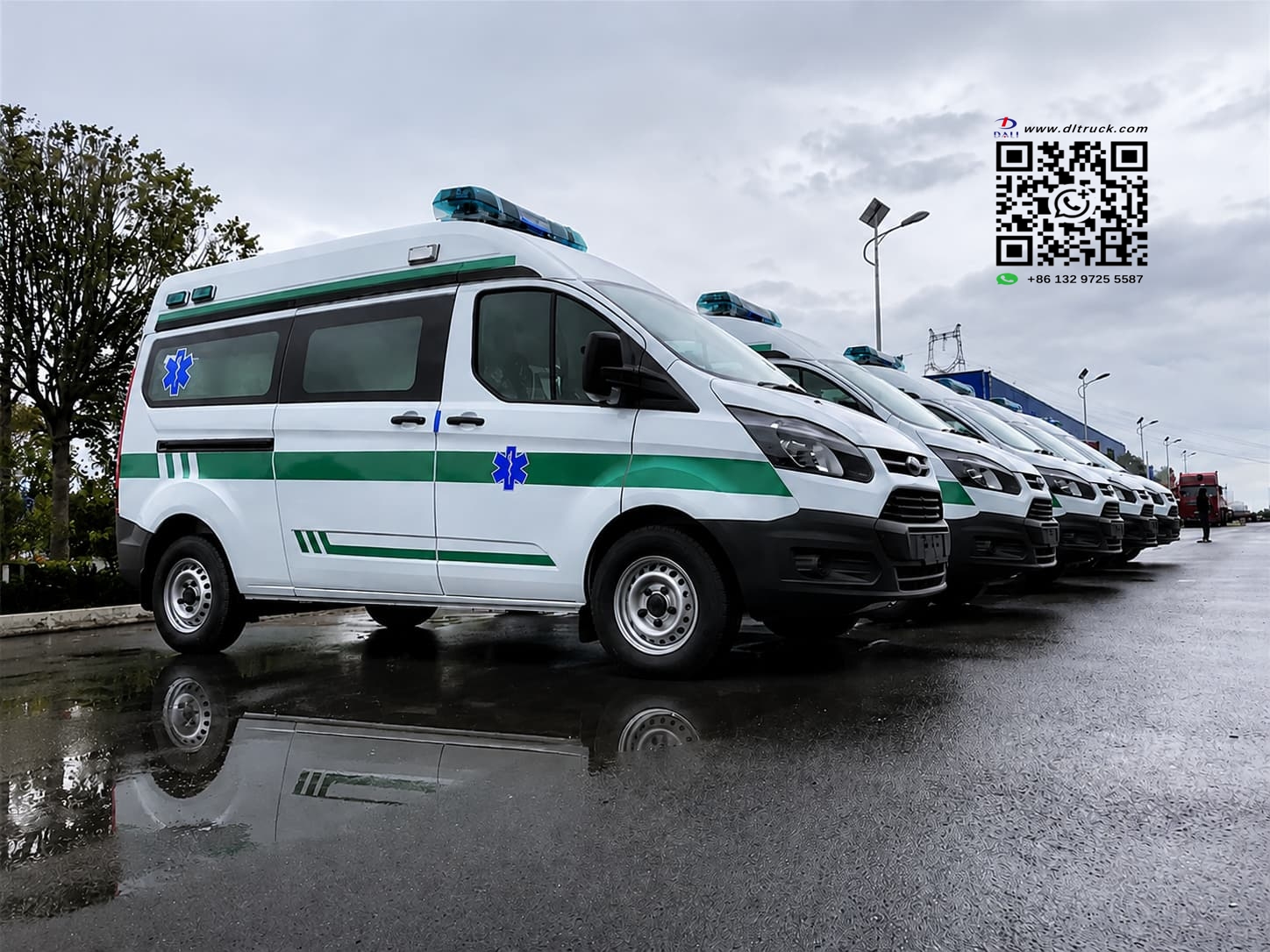
Patient Transport Ambulance: 5 Units for Mongolia Hospital
In August 2019, a hospital in Mongolia purchased five Ford V362 Patient Transport Ambulance units for patient transfer services. The project focused on practical hospital transportation, with each ambulance configured with medical equipment, passenger seating, power supply, climate control, and patient-care features.
The order was completed on August 19, 2019, while the original project report was dated August 20, 2019. The configuration was developed around the hospital’s need for reliable patient transportation and practical onboard medical support.
1. Customer Background
The customer was a hospital in Mongolia seeking dedicated vehicles for patient transfer operations. Unlike a standard passenger van, a hospital ambulance needs to accommodate patients, medical equipment, attendants, and essential onboard functions.
Therefore, the project required more than a suitable chassis. The interior needed a practical layout for patient movement, seating, medical equipment, lighting, ventilation, and electrical accessories.
The customer selected five Ford V362-based patient transport ambulances. This provided a standardized vehicle configuration for the hospital’s fleet and supported consistent daily operations.
2. Customer Challenge
Patient transportation requires a balance between vehicle capacity, medical functionality, passenger comfort, and operational practicality.
First, the ambulance needed to accommodate a portable folding stretcher for patient movement. In addition, the interior required dedicated storage and medical support equipment, including a medicine cabinet and a fixed oxygen cylinder.
The customer also needed equipment suitable for routine hospital transportation. Two transfusion hooks were included for medical support, while a sewage bucket provided an additional practical feature for patient care.
Meanwhile, the interior layout included two individual seats and a two-person soft seat with a soft back and safety belt. This arrangement helped provide designated seating for accompanying personnel during transportation.
Climate and electrical functions were also important. The specification included rear air conditioning and warm air, two 12V lamps, a 500W inverter, and a 220V power socket.
3. Our Patient Transport Ambulance Solution
For this Mongolia project, we configured five Ford V362 patient transport ambulances around the hospital’s stated application.
The patient compartment included a portable folding stretcher and a dedicated medicine cabinet. In addition, we arranged a fixed oxygen cylinder installation and two transfusion hooks to support basic medical transportation requirements.
The interior also received two individual seats and a two-person soft seat. The long seat included a soft cushion, soft back, and safety belt for passenger support.
Moreover, the ambulance used sliding windows with a middle partition. This configuration helped separate areas inside the vehicle while maintaining practical access and visibility.
For emergency identification, the specification included an all-blue warning light and alarm on the front roof. The ambulance also received an ambulance cross marking to clearly identify its medical transportation purpose.
Electrical equipment was another important part of the configuration. Each vehicle included two 12V lamps, a 500W inverter, and a 220V power socket.
Finally, rear air conditioning and warm air were included to improve the interior environment during patient transportation.
4. Medical Equipment and Interior Configuration
The value of a hospital ambulance depends heavily on its interior configuration. A suitable vehicle must support the workflow of drivers, medical personnel, patients, and attendants.
For this project, the equipment list covered several practical areas.
The stretcher provided a dedicated solution for patient movement. Meanwhile, the medicine cabinet created organized storage for medical supplies.
The fixed oxygen cylinder installation added another important medical support function. In addition, the transfusion hooks allowed medical staff to manage transfusion equipment during transportation.
The interior also used medical wear-resistant plastic floor leather. This specification was selected for a vehicle environment where the floor needs to withstand regular hospital use.
Furthermore, the rear climate system supported transportation in different weather conditions. This feature was particularly relevant for a Mongolia-based hospital operation, where seasonal temperature changes can be significant.
5. Manufacturing and Quality Control
The project record confirms that the five-unit order was completed on August 19, 2019. The original case documentation lists the vehicle configuration and the completed project quantity.
Rather than using a basic passenger vehicle without modification, the project required multiple specialized interior and electrical components. These included medical equipment, seating, lighting, power supply, warning equipment, interior flooring, and climate-control functions.
Therefore, production for this type of project requires coordination between the base vehicle and the specialized ambulance configuration.
The available project record does not provide individual factory inspection reports or detailed quality-control measurements. However, it confirms completion of the five-unit order with the specified ambulance configuration.
For international fleet buyers, this type of project demonstrates the importance of confirming the equipment list before production. A clear specification helps the supplier and customer maintain consistent configurations across multiple units.
6. Export Preparation and Delivery
After completing the five Ford V362 ambulances, the supplier prepared the vehicles for delivery to the Mongolian hospital.
The project involved five units rather than a single vehicle. Therefore, maintaining a consistent configuration across the fleet was an important part of the order.
Each ambulance was equipped according to the project specification, including the stretcher, medical cabinet, oxygen cylinder installation, transfusion hooks, seating, partition windows, warning system, electrical equipment, medical flooring, and rear climate functions.
As a result, the hospital received a standardized group of patient transfer vehicles rather than different configurations across the fleet.
Target: Product Category Page / Related Successful Case
7. Customer Value
The Mongolia project demonstrates how a commercial vehicle can be adapted for a specific healthcare transportation application.
First, the five-unit order provided the hospital with a standardized patient transfer fleet. This can simplify daily vehicle allocation and operational management.
Second, the interior configuration combined patient transportation equipment with practical passenger and medical support features. The stretcher, oxygen cylinder installation, transfusion hooks, medicine cabinet, and medical flooring addressed different aspects of hospital transportation.
In addition, the electrical and climate-control equipment added functionality beyond a conventional passenger vehicle. The 500W inverter, 220V power socket, 12V lamps, rear air conditioning, and warm air supported the ambulance’s intended operating environment.
Most importantly, the project shows the supplier’s ability to organize a multi-unit specialized vehicle order around a defined customer specification.
8. Export Experience for International Vehicle Buyers
International buyers often need more than a standard vehicle model. Hospitals, distributors, government organizations, and fleet operators may require specific interior layouts and equipment combinations.
This Mongolia project is a practical example of that requirement. The customer ordered five Ford V362 ambulances with a defined medical and passenger transportation configuration.
Moreover, the project demonstrates the importance of specification-based vehicle production. Equipment such as oxygen cylinder mounts, transfusion hooks, warning lights, medical flooring, seating, power sockets, and climate systems must be considered together.
Overall, the five-unit Mongolia order reflects a customized export approach focused on the actual application of the vehicle. For hospitals and fleet buyers planning a similar project, a detailed equipment list can provide a clear foundation for quotation, production, and delivery.


