
LPG Skid Station: 20 Units Delivered to Nigeria

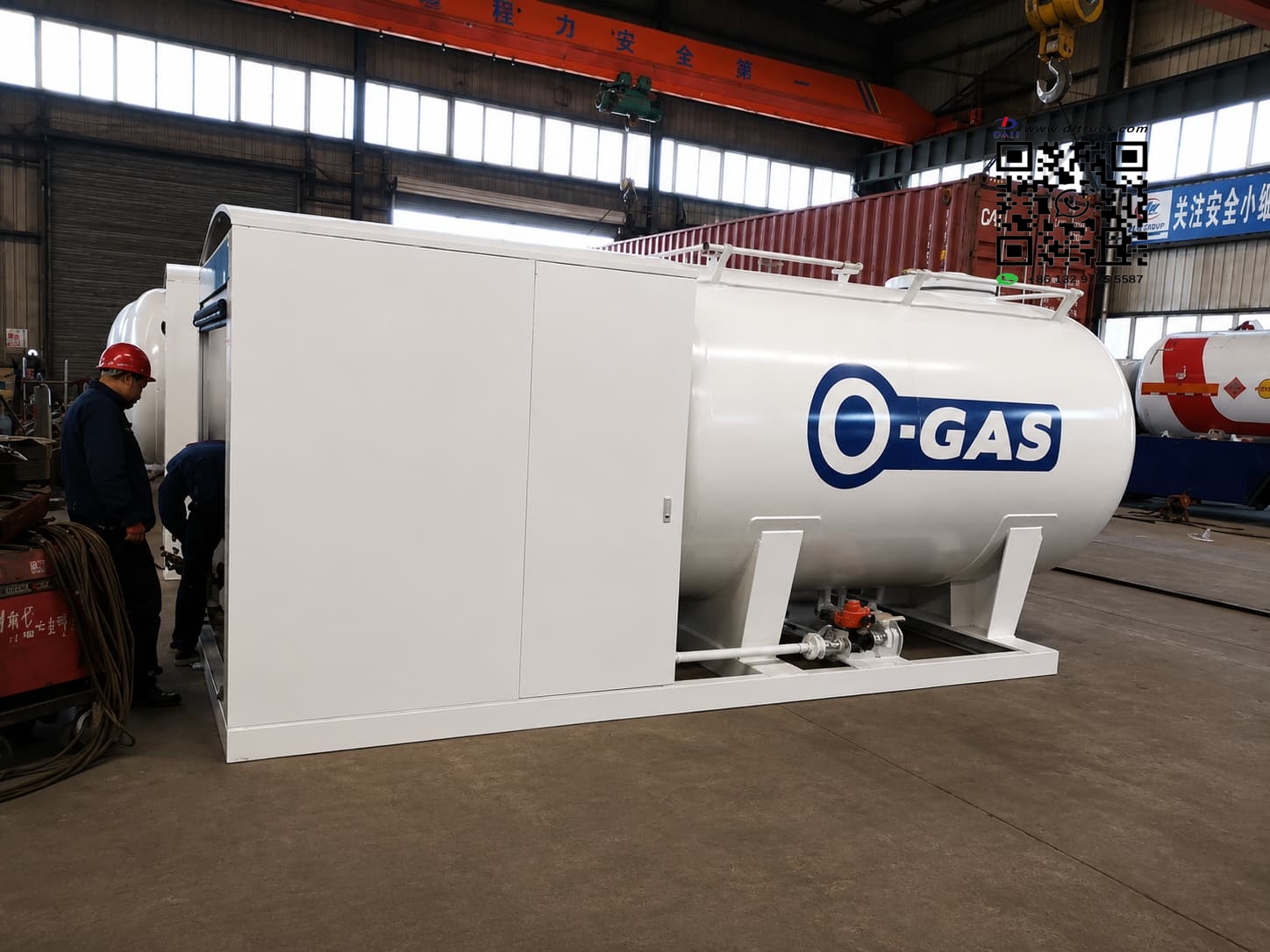
In February 2019, a major Nigerian LPG company completed a 20-unit LPG Skid Station project for domestic cooking gas cylinder refilling. The customer ordered 20 units of 5-ton, 10,000-liter LPG refill stations to expand its cylinder refilling business across Nigeria.
The project report was dated February 10, 2019. After technical discussions and project coordination, the 20 customized LPG skid stations were completed and loaded into ten 40-foot high-cube containers for shipment to Nigeria.
1. Customer Background
The customer was a major Nigerian oil and gas company with an established LPG distribution business. Its project focused on expanding LPG cylinder refilling services for domestic cooking applications.
As the customer’s LPG business grew, it needed additional gas refill infrastructure that could be deployed efficiently across different locations.
Therefore, the customer selected a batch of 20 LPG skid stations instead of building a single large centralized filling facility.
Each unit was specified as a 5-ton, 10,000-liter LPG cylinder refill station. This configuration provided a practical solution for localized LPG storage and cylinder filling operations.
2. Customer Challenge
Expanding an LPG cylinder refilling network requires equipment that combines storage, pumping, metering, and cylinder filling functions.
First, the customer needed to increase its ability to refill domestic LPG cylinders. A centralized facility alone could limit distribution flexibility, particularly when customers are located across different service areas.
Meanwhile, the customer needed multiple standardized stations. Twenty units required consistent equipment specifications and coordinated production.
In addition, the equipment needed to fit into an export-friendly transportation solution. Since the project involved 20 complete skid stations, container loading and shipping efficiency were important considerations.
The customer also required technical coordination before production. Therefore, the project team needed to confirm the skid station design and equipment configuration before manufacturing began.
3. Our LPG Skid Station Solution
For the Nigeria project, we manufactured 20 customized LPG Skid Station units with a 5-ton and 10,000-liter configuration.
The skid stations were designed for LPG cylinder refilling operations. Each unit combined an LPG storage tank with equipment for transferring and dispensing LPG.
The equipment configuration included a Corken pump, an ABB motor, a Rochester level gauge, and an LPG dispenser. These components supported the core functions required for gas storage, transfer, level monitoring, and cylinder filling.
Moreover, the standardized design allowed all 20 units to follow the same basic configuration. This was important for a large multi-location LPG distribution project.
Before production, the technical design was discussed with the customer through multiple rounds of communication. The project team also visited the customer’s office in Lagos in June 2018 to discuss the project requirements directly.
[Internal Link]
Anchor Text:
LPG Skid Station
Target: Product Page / LPG Station Category Page
4. LPG Cylinder Refilling Equipment
An LPG refill station needs more than a storage tank. The station must also transfer LPG from the storage vessel and accurately dispense the required amount into cylinders.
For this project, the skid station included a Corken pump and ABB motor. Together, these components provided the pumping system required for LPG transfer.
The Rochester level gauge provided tank-level monitoring. Meanwhile, the LPG dispenser supported the cylinder refilling process.
This combination created a compact LPG filling solution that could be deployed as an integrated unit.
Furthermore, the 5-ton, 10,000-liter configuration offered a practical capacity for local LPG cylinder refilling operations.
For LPG distributors, the exact configuration can be developed around local regulations, required storage capacity, filling volume, pump specifications, electrical requirements, and site conditions.
5. Manufacturing and Quality Control
A 20-unit LPG skid station project requires careful coordination between tank manufacturing, mechanical equipment, electrical components, and final assembly.
The project team first confirmed the technical design with the customer. After discussions by email and messaging, the supplier’s team visited the customer’s Lagos office in June 2018 to review the requirements.
This engineering communication helped establish the final specification before production.
The completed stations used a standardized 5-ton, 10,000-liter configuration. Each unit incorporated the specified pump, motor, level gauge, and LPG dispenser.
Moreover, manufacturing 20 units under one project helped maintain consistency between individual stations. This is especially valuable when a customer plans to deploy equipment across multiple LPG distribution locations.
The project was completed in February 2019 after the production stage.
6. Delivery and Export Preparation
After production, the 20 LPG skid stations were prepared for overseas shipment.
The project team loaded the 20 units into 10 units of 40-foot high-cube containers for transportation to Nigeria. This containerized approach provided a practical way to organize a large multi-unit equipment shipment.
Because the project involved complete skid stations rather than individual tanks, loading efficiency was an important part of export preparation.
The equipment was therefore organized for container transportation before delivery to the Nigerian market.
For international LPG projects, early logistics planning can help buyers understand shipping requirements and avoid unnecessary delays during export.
[Internal Link]
Anchor Text:
LPG Filling Station Equipment
Target: LPG Product Category Page
7. Customer Value
The project gave the Nigerian customer 20 standardized LPG cylinder refilling stations for expanding its domestic cooking gas business.
First, the multi-unit configuration allowed the customer to increase its LPG refilling capacity across multiple locations.
Second, each skid station combined storage and filling equipment into one integrated solution. This reduced the need for the customer to source separate components for each station.
Moreover, the standardized configuration simplified the overall project. All 20 units followed the same 5-ton, 10,000-liter design and used the specified core equipment.
The containerized delivery arrangement also supported efficient international transportation. Ten 40-foot high-cube containers were used to transport the 20 units to Nigeria.
As a result, the customer received a scalable LPG cylinder refilling solution designed around its domestic gas distribution strategy.
8. Export Experience in the Nigerian LPG Market
This project demonstrates the importance of technical communication when supplying specialized LPG equipment to an overseas customer.
The project began with technical discussions and continued through direct communication with the customer’s engineering and procurement team. The supplier’s team then visited Lagos before the final order was confirmed.
For international LPG buyers, this type of cooperation can help clarify equipment requirements before production.
In addition, large batch projects require more than manufacturing capability. The supplier must coordinate technical specifications, component selection, production scheduling, quality control, and export packing.
The Nigeria project involved 20 complete LPG skid stations, making consistent production and containerized shipping particularly important.
9. Why Choose an LPG Skid Station for Cylinder Refilling
An LPG Skid Station provides a compact approach to LPG storage and cylinder refilling.
For distributors expanding domestic cooking gas services, skid-mounted equipment can combine the main storage and filling functions into one integrated unit.
The Nigeria project included 20 units, each with a 5-ton and 10,000-liter configuration. The stations also incorporated a Corken pump, ABB motor, Rochester level gauge, and LPG dispenser.
Therefore, the project provides a useful reference for LPG companies planning multi-location cylinder refilling operations.
Overall, the 20-unit Nigeria project demonstrates the ability to develop standardized LPG refill stations around a customer’s specific business requirements. For importers, LPG distributors, and energy companies, similar systems can be customized according to storage capacity, filling requirements, local regulations, and site conditions.


